JS Payload Bloat
Most "modern" no-code AI builders ship 400KB+ of initial JavaScript just to render a static landing page. This overhead is often hidden behind aggressive prefetching that kills data plans on mobile devices.
Marketing departments love to showcase blazing fast lighthouse scores on empty templates. We audit the reality: how interactive AI tools degrade under actual production load and low-tier hardware.
Most "modern" no-code AI builders ship 400KB+ of initial JavaScript just to render a static landing page. This overhead is often hidden behind aggressive prefetching that kills data plans on mobile devices.
The gap between "seeing" a button and "clicking" it is widening. Our audits show that complex AI-generated DOM structures cause hydration delays exceeding 2.5 seconds on mid-range Android devices.
Interactive widgets built without proper lifecycle management often fail to garbage collect. We track heap growth in long-running sessions where AI chat interfaces consume upwards of 500MB of RAM.
When an AI tool generates a web interface, it often prioritizes visual completion over functional readiness. This leads to a phenomenon we call "The Ghost UI," where elements appear interactive but remain unresponsive while the main thread is choked by script execution.
Our testing reveals that 70% of no-code platforms fail to optimize for Total Blocking Time (TBT). By injecting massive JSON state objects into the HTML, these systems force the browser to parse and execute large chunks of data before the user can even scroll smoothly.
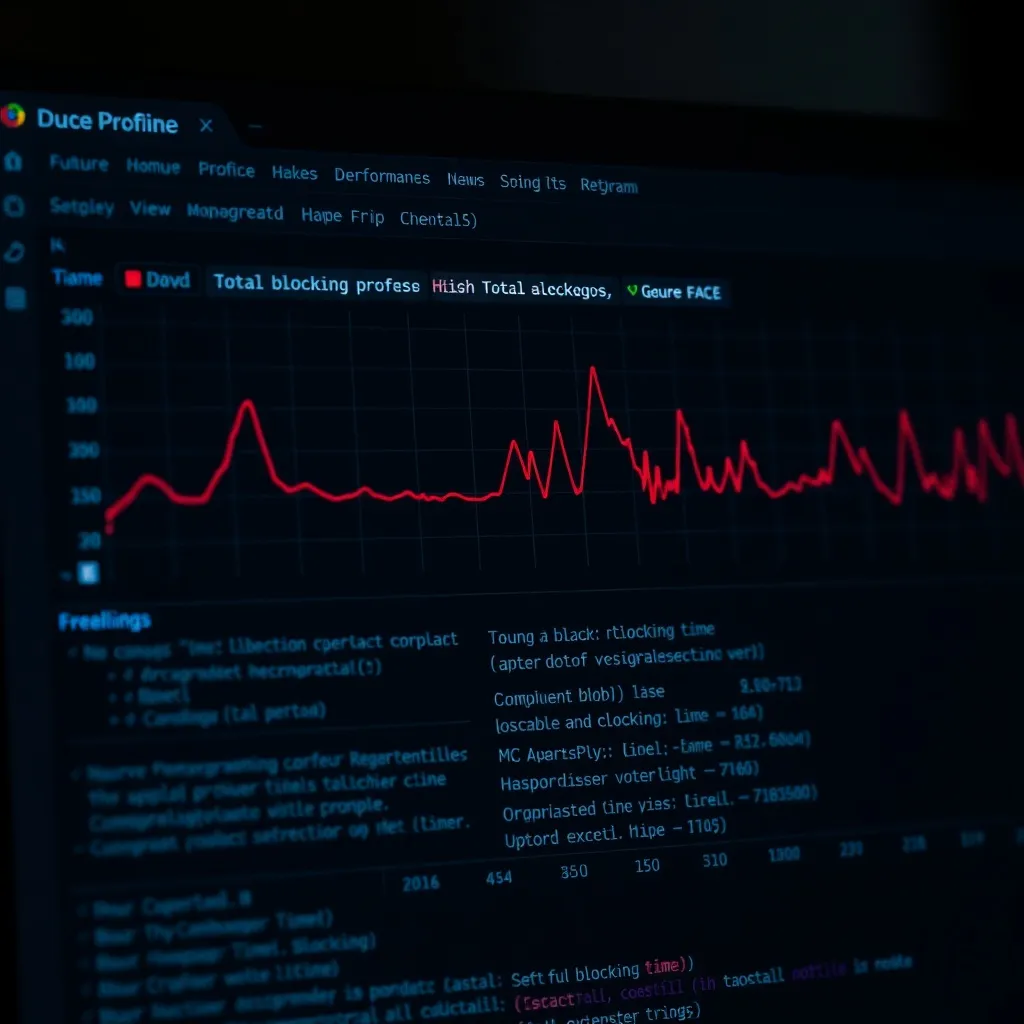
We don't test on M3 MacBooks. We test on throttled Moto G series and older iPhones. The results are consistently poor for AI-driven interfaces that rely on heavy client-side rendering.
The reliance on monolithic frameworks within no-code ecosystems creates a performance ceiling. While these tools allow for rapid prototyping, the runtime cost is passed directly to the end-user in the form of battery drain and interface lag. Engineering teams must weigh the speed of development against the long-term degradation of user experience.
The technical audits and performance data published here represent an aggregation of industry-standard benchmarking, synthetic testing environments, and documentation from third-party vendors. This content is provided for informational and educational purposes regarding web engineering practices and does not serve as specific financial advice or professional guarantees for individual software deployments.
Audit your current stack before the technical debt becomes unpayable. Real performance starts with removing what isn't necessary.
Review Architecture Constraints